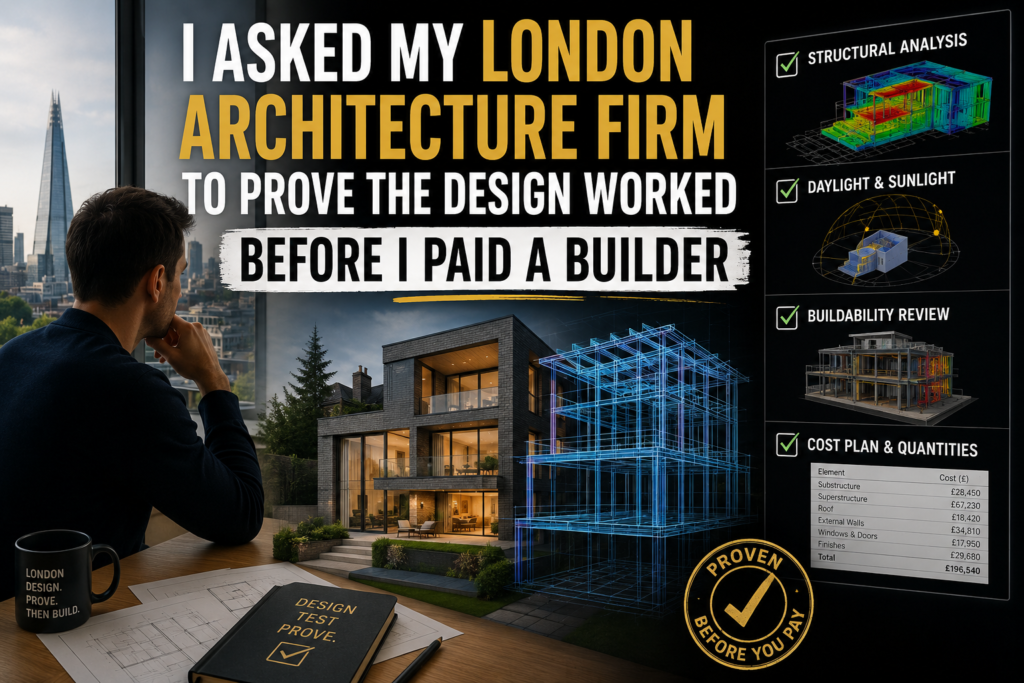
I had been burned before by drawings that looked great on paper and fell apart in real life. So this time I asked something that surprised the architecture firm london I had hired. Before I commit a penny to a builder, show me the design actually works. Prove it. They did, and it changed how confident I felt about the whole project.
On my first ever project, years back, I had approved flat drawings I didnt really understand, paid a builder, and then watched problems appear that nobody had spotted on paper. I swore I would never do that again. This time I wanted proof before money changed hands.
The firm didnt flinch. They walked me through the design in ways I could actually understand, tested it against reality, and showed me it held up. That extra step, before the builder was even appointed, saved me from repeating my old mistake.
Why I Refused to Trust Flat Drawings Again
Flat drawings are hard for a normal person to read. Lines on paper dont tell you how a space will feel, whether a door will be awkward, or if a window faces a wall.
On my first project I nodded at drawings I couldnt truly picture. The result had problems I only saw once built. A doorway in a daft place. A room darker than I expected. All approved by me because I didnt know what I was looking at.
This time I wanted to understand before committing. Not just trust, but actually see that the design worked. That meant asking the firm to show me more than flat plans.
How They Proved the Design Worked
The firm produced a simple 3D model so I could walk through the space virtually. Suddenly the flat drawings made sense. I could see how rooms connected, where light fell, how it would feel to move through.
They tested the design against the real measured survey of my house, so it wasnt a fantasy that ignored the actual building. They showed me the structure was sound and the layout practical, not just pretty.
Seeing it in three dimensions caught two things I would have missed. A window I wanted faced a neighbours wall. A walkway through the kitchen was awkward. We fixed both on screen, for nothing, before a builder was ever involved.
Why Testing Before Building Saves Money
The point of proving the design upfront is simple. Changes on a screen cost nothing. Changes on a building site cost a fortune.
Every problem we caught in the model was a problem that didnt appear on site, where fixing it means undoing real work and paying for it twice. The cheapest time to find a mistake is before anyone picks up a tool.
A good design and build process bakes this testing in, refining the design until it genuinely works, then handing the builder something proven rather than hopeful. That order, prove first then build, is the whole point.
What the Builder Got Instead of Guesswork
Because the design was tested and resolved, the builder received a complete, confident set of information. No vague areas, no unanswered questions, no discovering problems mid build.
That meant an accurate price. The builder could quote properly because everything was nailed down. There were no nasty variations later, because the surprises had already been designed out.
A builder working from a proven design works faster and cheaper than one interpreting half resolved drawings. My insistence on proof upfront made the whole construction stage smoother and more predictable.
The Confidence It Gave Me
The biggest difference was how I felt signing the builders contract. On my first project I signed with crossed fingers, hoping it would be fine. This time I signed knowing the design worked, because I had seen it.
That confidence is worth a lot. Building work is stressful enough without quietly worrying you have approved something flawed. I had no such worry, because the firm had shown me, not just told me.
It turned the whole project from an act of faith into an informed decision. I knew what I was getting before I paid for it.
What to Ask Before You Appoint a Builder
Ask your architect to show you the design in a way you can actually understand. A 3D model, a walkthrough, anything beyond flat plans you have to take on trust.
Ask them to test it against the real measurements of your house, and to talk you through how it works. Catch the problems on screen, where they cost nothing, not on site, where they cost plenty.
Six to eight months from that prove it conversation to a finished project with none of the surprises my first build suffered. I asked the firm to show me the design worked before I paid a builder. They did, and that proof was the best money I spent. Never sign off on something you cant picture.