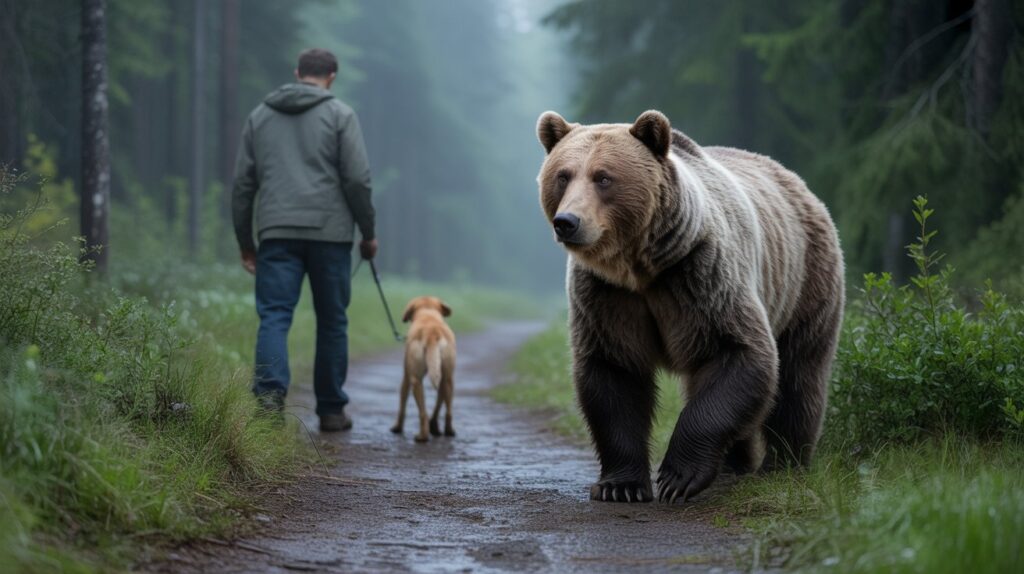
Grizzly Bear Dog Walker Encounter Raises Serious Safety Concerns
A grizzly bear dog walker encounter has once again highlighted the growing tension between wildlife and human activity in natural and semi-urban areas. Incidents like these are becoming more frequent as human expansion overlaps with wildlife habitats.
In this case, a routine dog walk quickly turned into a high-risk situation when a grizzly bear appeared unexpectedly, forcing the individual to react within seconds to avoid a potentially dangerous outcome.
What Typically Happens in These Encounters
In most reported cases of a grizzly bear dog walker encounter, the situation unfolds rapidly:
- The dog may notice the bear first and react aggressively or defensively
- The bear may feel threatened, especially if surprised
- The human is left managing both the dog and the situation
Grizzly bears are highly protective animals, particularly if cubs or food sources are nearby. Even a non-aggressive bear can become dangerous if it perceives a threat.
Why These Encounters Are Increasing
Experts point to several reasons behind the rise in grizzly bear dog walker encounters:
- Expansion of residential areas near forests
- Increased outdoor recreation activities
- Seasonal food shortages pushing bears closer to human zones
- Improper waste management attracting wildlife
These factors create more opportunities for unexpected interactions.
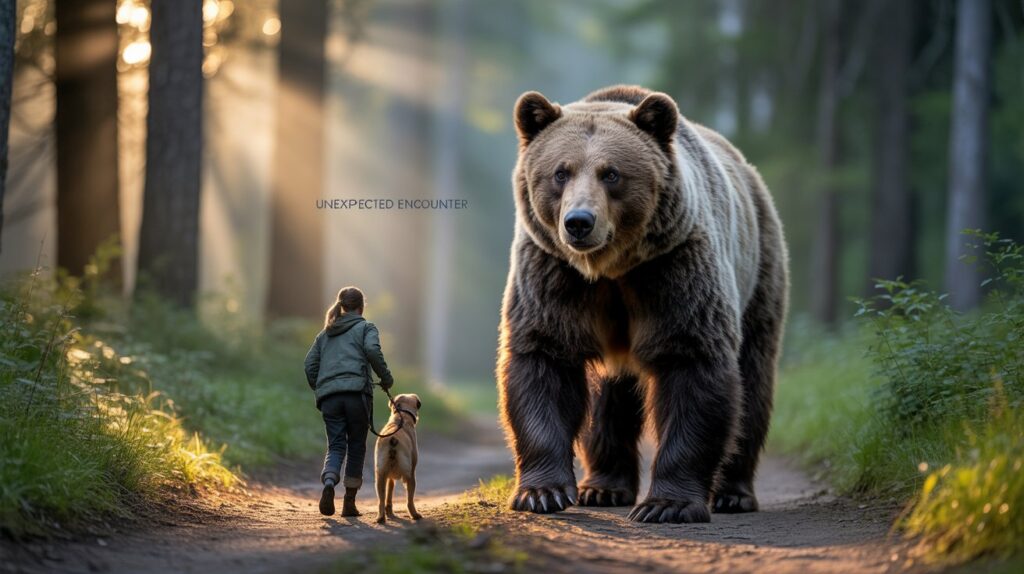
Behavior of Grizzly Bears in Close Encounters
Understanding bear behavior is critical in analyzing a grizzly bear dog walker encounter.
Grizzlies may respond in different ways:
- Defensive stance if they feel threatened
- Bluff charges to scare off perceived danger
- Aggressive attack in rare but serious cases
Their reaction often depends on how surprised they are and whether they feel their space is being invaded.
The Role of Dogs in Escalating Situations
Dogs can unintentionally increase the risk during a grizzly bear dog walker encounter.
Key risks include:
- Dogs barking or chasing the bear
- Returning to the owner with the bear following
- Triggering a defensive response from the bear
This is why many wildlife authorities recommend keeping dogs on a leash in bear-prone areas.
Safety Guidelines During a Bear Encounter
When facing a grizzly bear dog walker encounter, experts recommend:
- Stay calm and avoid sudden movements
- Keep the dog close and under control
- Do not run, as it may trigger a chase response
- Speak calmly to identify yourself as human
- Slowly back away while maintaining visual awareness
These actions can significantly reduce the risk of escalation.
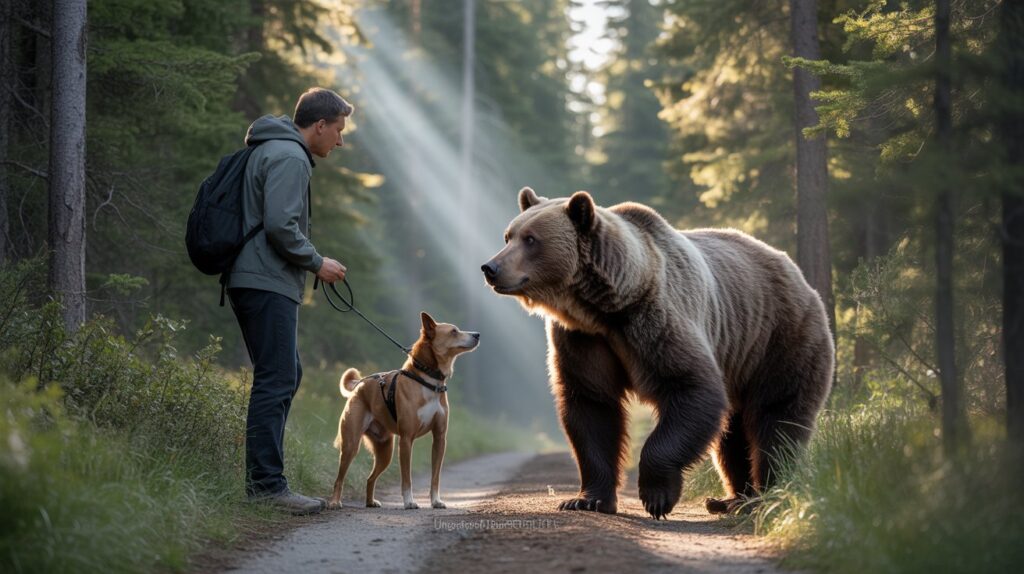
Real-World Outcomes of Similar Incidents
In many reported cases, dog walkers manage to escape safely due to quick thinking and awareness. However, there have also been instances where:
- Dogs were injured or lost
- Walkers suffered injuries
- Wildlife authorities had to intervene
This makes every grizzly bear dog walker encounter a serious public safety issue.
Wildlife Management and Official Response
Authorities often respond to such incidents by:
- Monitoring bear activity in the area
- Issuing public safety warnings
- Temporarily restricting access to trails
- Educating the public about wildlife safety
These measures aim to prevent future encounters and protect both humans and animals.
How to Prevent Future Encounters
Prevention is the most effective strategy when dealing with wildlife risks.
Recommended steps include:
- Avoid walking in high-risk areas during dawn or dusk
- Make noise while walking to alert wildlife
- Carry bear spray as a precaution
- Stay on marked trails
- Keep dogs leashed at all times
These practices reduce the likelihood of a dangerous grizzly bear dog walker encounter.
Environmental Impact and Human Responsibility
As human activity continues to expand, encounters with wildlife are becoming inevitable. However, responsible behavior can minimize risks.
Respecting wildlife habitats, maintaining distance, and following safety guidelines are essential steps in reducing conflict between humans and animals.
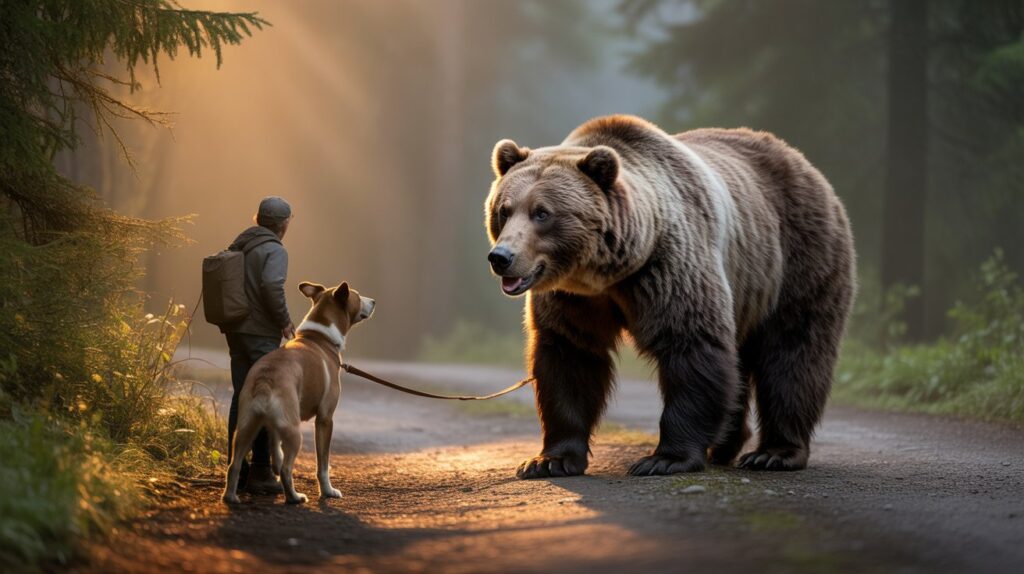
Strategic Insight
The grizzly bear dog walker encounter is not just an isolated event—it reflects a broader pattern of increasing interaction between humans and wildlife. As these encounters become more common, awareness, preparation, and responsible behavior are critical for ensuring safety.
Disclaimer
This article is for informational and news analysis purposes only. For safety guidelines, always follow official wildlife authority recommendations in your region.