Game Identity and Tactical Contrast
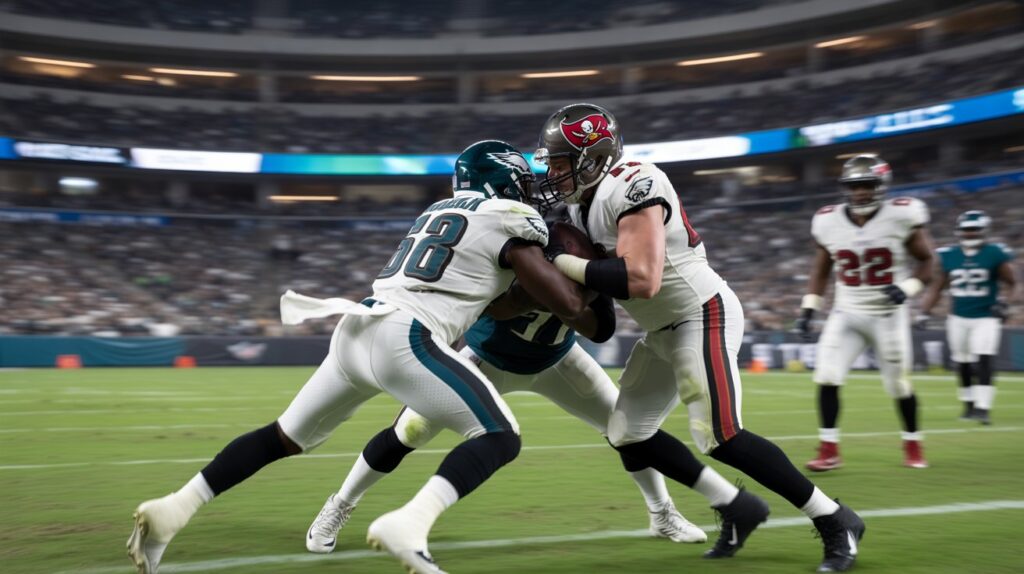
The clash between the Philadelphia Eagles and the Tampa Bay Buccaneers represents a contrast in offensive identity and defensive philosophy within the National Football League.
While the Eagles rely heavily on dual-threat quarterback play and dominant offensive lines, the Buccaneers often emphasize structured passing schemes and adaptive defensive coverage. The philadelphia eagles vs tampa bay buccaneers match player stats reveal how these contrasting styles translate into measurable performance.
Quarterback Influence and Game Control
Quarterback play defines the tempo and strategic execution in this matchup.
For the Eagles:
- Jalen Hurts brings a dual-threat advantage
- Combines passing efficiency with rushing touchdowns
- High red-zone impact due to mobility
For the Buccaneers:
- Baker Mayfield focuses on pocket passing
- Strong mid-range accuracy and decision-making
- Relies on structured offensive plays
In philadelphia eagles vs tampa bay buccaneers match player stats, total yards generated by quarterbacks often include both passing and rushing contributions, especially for Hurts.
Offensive Line Dominance and Protection Metrics
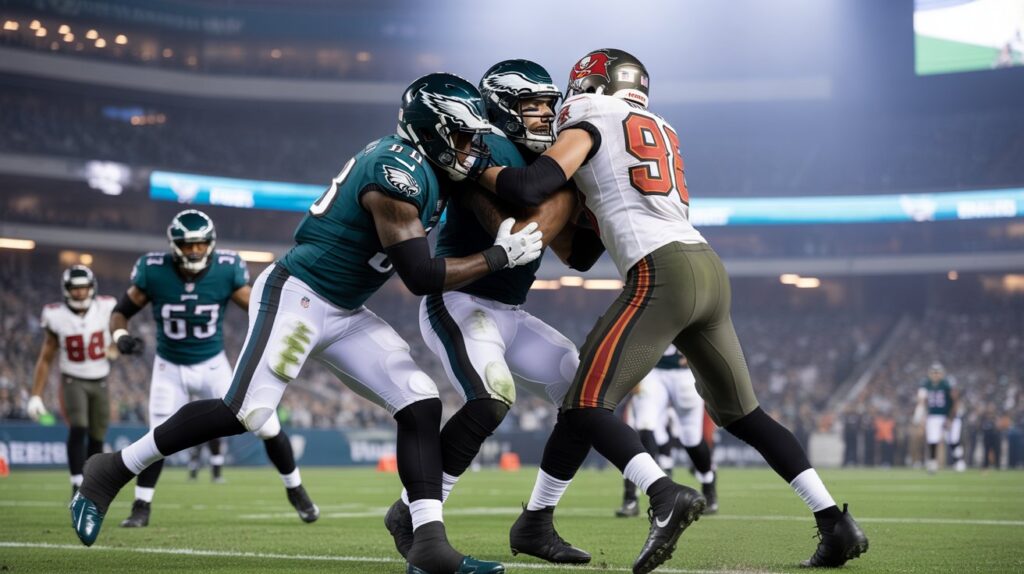
One unique aspect of this matchup is offensive line performance, particularly for the Eagles.
Key factors include:
- Pass protection efficiency
- Time allowed in the pocket
- Run-block success rate
The Eagles’ offensive line often ranks among the best, directly influencing the philadelphia eagles vs tampa bay buccaneers match player stats by enabling longer drives and sustained pressure.
Running Game Efficiency and Red Zone Execution
Rushing performance plays a critical role in controlling momentum.
Eagles rushing unit:
- Strong committee approach with quarterback involvement
- High success rate in short-yardage situations
Buccaneers rushing unit:
- Focus on balance rather than dominance
- Used to support passing game rather than lead it
The philadelphia eagles vs tampa bay buccaneers match player stats frequently show the Eagles outperforming in rushing touchdowns and red-zone efficiency.
Receiver Matchups and Coverage Battles
Wide receiver performance is heavily influenced by defensive matchups.
Eagles receiving core:
- A.J. Brown provides physical dominance
- DeVonta Smith adds speed and precision
Buccaneers receiving threats:
- Mike Evans excels in contested catches
- Chris Godwin offers versatility
In philadelphia eagles vs tampa bay buccaneers match player stats, receiving yards and contested catch success rates are key indicators.
Defensive Schemes and Disruption Metrics
Defense in this matchup is about creating pressure and limiting explosive plays.
Eagles defense:
- Aggressive pass rush and blitz packages
- High sack totals and quarterback pressure
Buccaneers defense:
- Adaptive coverage schemes
- Focus on limiting deep plays
Important defensive stats include:
- Sack rate and pressure percentage
- Turnovers forced
- Defensive stops on third down
These metrics shape the outcome of philadelphia eagles vs tampa bay buccaneers match player stats.
Turnover Battle and Momentum Shifts
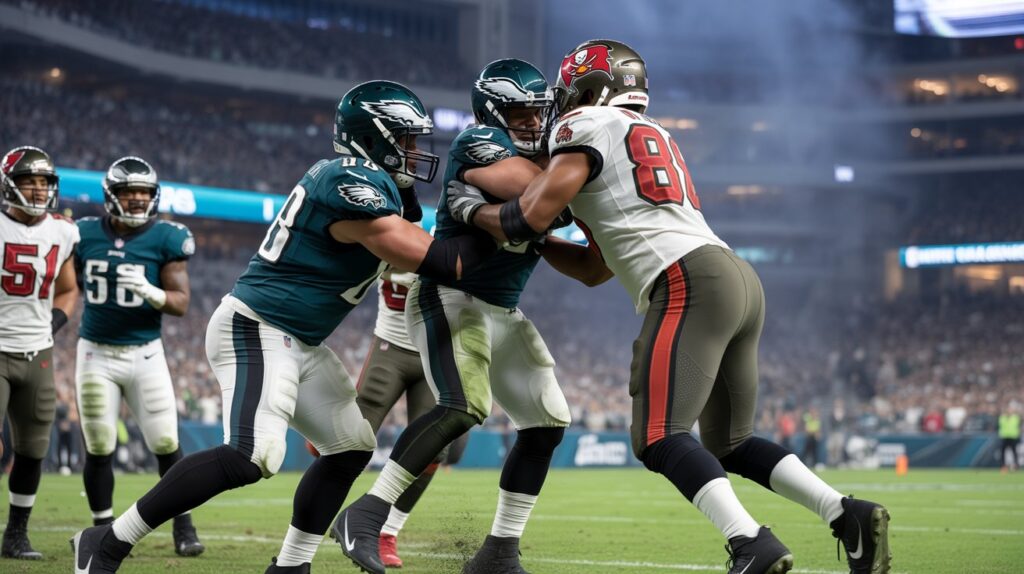
Turnovers are often the defining factor in close games.
Key elements include:
- Interceptions under pressure
- Fumbles during high-contact plays
- Defensive takeaways leading to scoring drives
The philadelphia eagles vs tampa bay buccaneers match player stats often highlight turnover margin as a decisive metric.
Tempo, Possession, and Game Flow
Game tempo varies significantly between these teams.
- Eagles often control possession through sustained drives
- Buccaneers rely on quick scoring opportunities
Time of possession and play count are critical components of philadelphia eagles vs tampa bay buccaneers match player stats, influencing fatigue and defensive performance.
Advanced Metrics and Analytical Insights
Modern NFL analysis introduces deeper performance indicators:
- Expected points added per play
- Quarterback efficiency under pressure
- Yards after catch for receivers
- Defensive coverage success rate
These advanced metrics provide a more complete understanding of philadelphia eagles vs tampa bay buccaneers match player stats beyond traditional numbers.
Key Player Impact Summary
The outcome of this matchup often depends on standout individual performances.
Critical contributors include:
- Jalen Hurts for dual-threat production
- A.J. Brown for explosive receiving plays
- Baker Mayfield for controlled passing execution
- Mike Evans for red-zone scoring
Their performances heavily influence the statistical narrative of the game.
Strategic Differences That Reflect in Stats
The statistical differences between these teams often reflect their philosophies:
- Eagles emphasize physical dominance and control
- Buccaneers focus on precision and adaptability
This contrast creates a unique statistical profile in philadelphia eagles vs tampa bay buccaneers match player stats.
Future Performance Outlook
Looking ahead, this matchup will continue to evolve based on:
- Player development and injuries
- Coaching adjustments and play-calling strategies
- Defensive scheme evolution
Future games are expected to maintain high competitiveness with evolving statistical trends.
Additional Insight
The philadelphia eagles vs tampa bay buccaneers match player stats highlight how modern football is no longer just about raw numbers but about efficiency, adaptability, and execution under pressure. Teams that can combine these elements consistently gain a competitive advantage.
Disclaimer
This article is for informational and analytical purposes only. Player stats and performances may vary depending on the specific game, season, and team conditions.